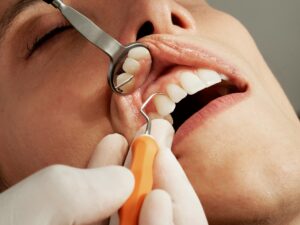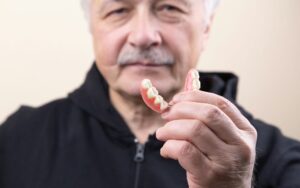
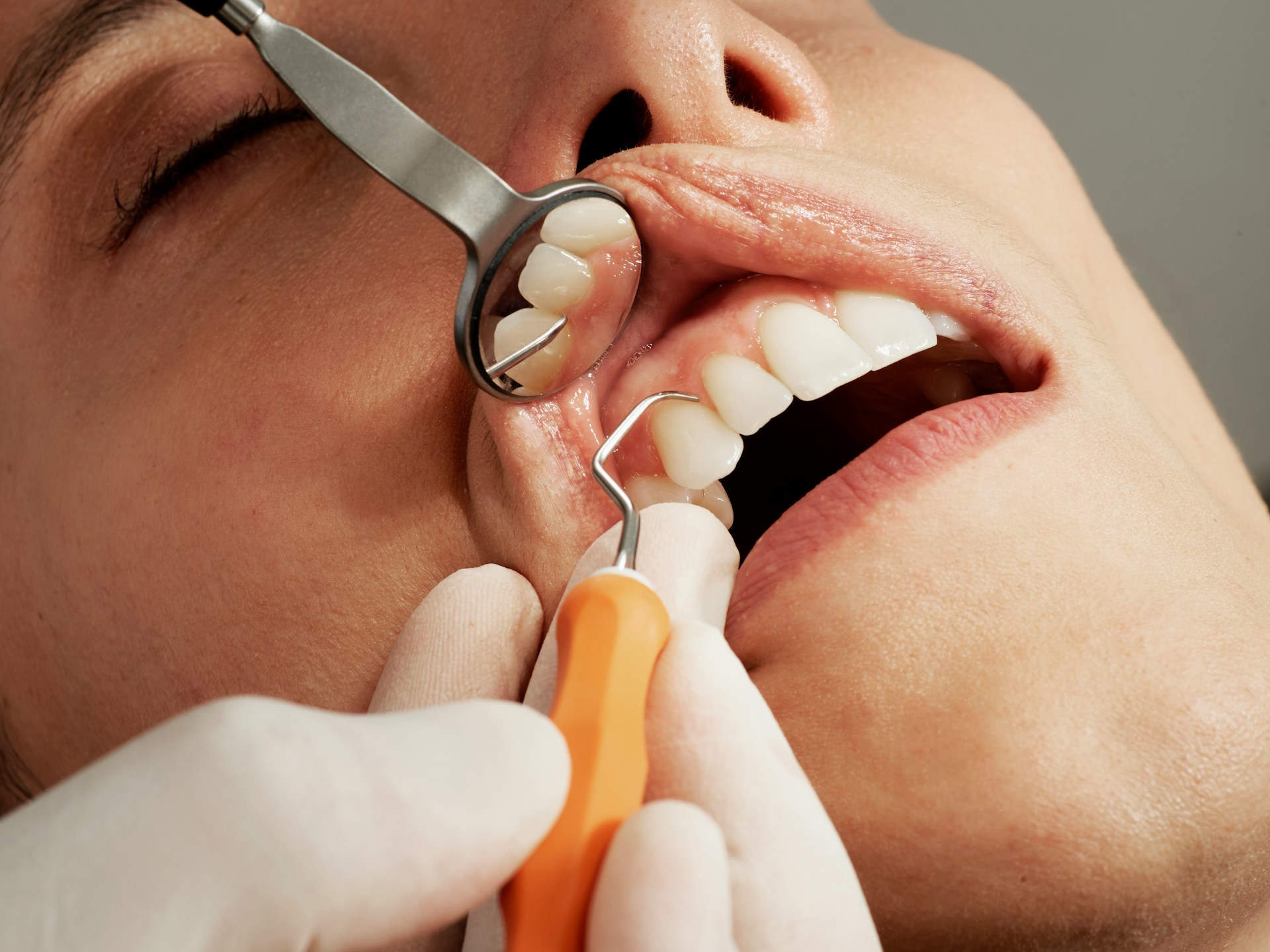
Food may collect around missing teeth or dental work when there is an open space, a change in tooth or restoration shape, or an area that is harder to clean. By itself, food trapping does not confirm that an implant or restoration has failed.
This article is general education and does not replace a clinical evaluation. Your treating team can examine the area and determine whether the concern may relate to a missing tooth, crown, bridge, denture, implant restoration, gums, bite, or more than one factor.
Why Can Food Get Trapped Around Missing Teeth or Dental Work?
A missing tooth can leave a space where food moves toward the gumline or between nearby teeth. Over time, nearby teeth, the bite, or the shape of the gums may change. These changes do not happen the same way for everyone, but they can affect where food collects.
Food trapping may feel like pressure, discomfort, irritation, or the need to clean the same spot repeatedly. Those symptoms can be frustrating, but they do not identify the cause on their own.
A broader evaluation may consider:
- The shape of the space or restoration
- The condition of nearby teeth
- Gum health in the area
- How your teeth come together when you bite
- Whether the area is easy or difficult to clean
What If Food Starts Catching Around a Crown, Bridge, or Implant Restoration?
Food may catch around a crown, bridge, denture, or implant restoration when contact points change or the restoration becomes worn or damaged; the area may need professional review. That does not always mean the dental work is failing.
An implant restoration is also different from the implant itself. The visible crown, bridge, or denture is attached to the implant, while the implant component is placed in the jawbone. A concern around the visible restoration does not automatically mean there is a problem with the implant below it.
A dental evaluation may include review of:
- The shape and condition of the restoration
- The gums around the area
- Your bite and pressure on the restoration
- How easily the area can be cleaned
- Whether the restoration feels stable
If you are learning more about implant care in general, the FDA’s patient guidance on dental implants explains that implants can have benefits for some patients but also involve possible risks and complications. Your treating team can explain how those considerations apply to you.
When Should Food Trapping Be Checked Professionally?
Persistent food trapping deserves attention, especially if it starts along with other changes. It may be time to schedule an evaluation if you notice:
- A restoration that feels loose
- Repeated gum bleeding
- New discomfort when biting
- Swelling, drainage, or discomfort
- A change in how your teeth fit together
- The same area catching food over and over
Severe swelling, fever, trouble swallowing, or difficulty breathing should be assessed promptly through appropriate urgent or emergency care.
For patients in Prairieville, Baton Rouge, and surrounding areas, an evaluation can help clarify whether the concern may involve the restoration, gum health, bite forces, or the implant area itself. Depending on the findings, the next discussion may involve adjusting the way the area is cleaned, reviewing the restoration fit, or considering repair or replacement when appropriate.
Could Implant-Supported Treatment Be Part of the Discussion?
Sometimes, yes. If you are dealing with repeated food trapping because of missing teeth, unstable dental work, or broader bite concerns, your treating team may discuss whether other tooth replacement options are worth reviewing. That does not mean the same treatment is right for everyone.
At Fusion Implant Center, patients can learn more about full-mouth dental implant options, coordinated implant treatment planning, and common implant questions before an in-person visit.
Discuss Your Implant or Tooth Replacement Concerns
For food trapping around crowns on natural teeth or existing removable dentures, contact your general dentist or the clinician who provided the restoration. At Fusion Implant Center, we can discuss concerns involving implants or missing teeth and whether the treatment options offered by the practice may fit your needs. An evaluation is needed to determine the cause of persistent food trapping and an appropriate next step. Call Fusion Implant Center at (225) 402-2113 to schedule a free consultation. Our team can walk you through costs and options by phone.
Food-Trapping Questions Patients Often Ask
Is Food Getting Stuck Around an Implant Always a Sign of Implant Failure?
No. Food trapping can have several possible causes, including restoration shape, cleaning challenges, gum changes, bite changes, or concerns involving the implant area. An exam is needed to understand what may be contributing to the problem.
Can a Loose Crown or Bridge Be Repaired?
Some restorations may be repairable, while others may need replacement. The appropriate option depends on the condition of the restoration, the supporting tooth or implant, the gums, your bite, and other individual factors.
Should You Schedule an Evaluation If Food Keeps Getting Trapped Near an Implant?
Yes, especially if it is persistent or comes with discomfort, bleeding, swelling, or a loose restoration. An assessment can help determine whether repair may be appropriate or whether another concern needs attention.
Sources
- U.S. Food and Drug Administration. Dental Implants: What You Should Know.
- MedlinePlus. Difficulty Breathing and Difficulty Swallowing.