About This Video
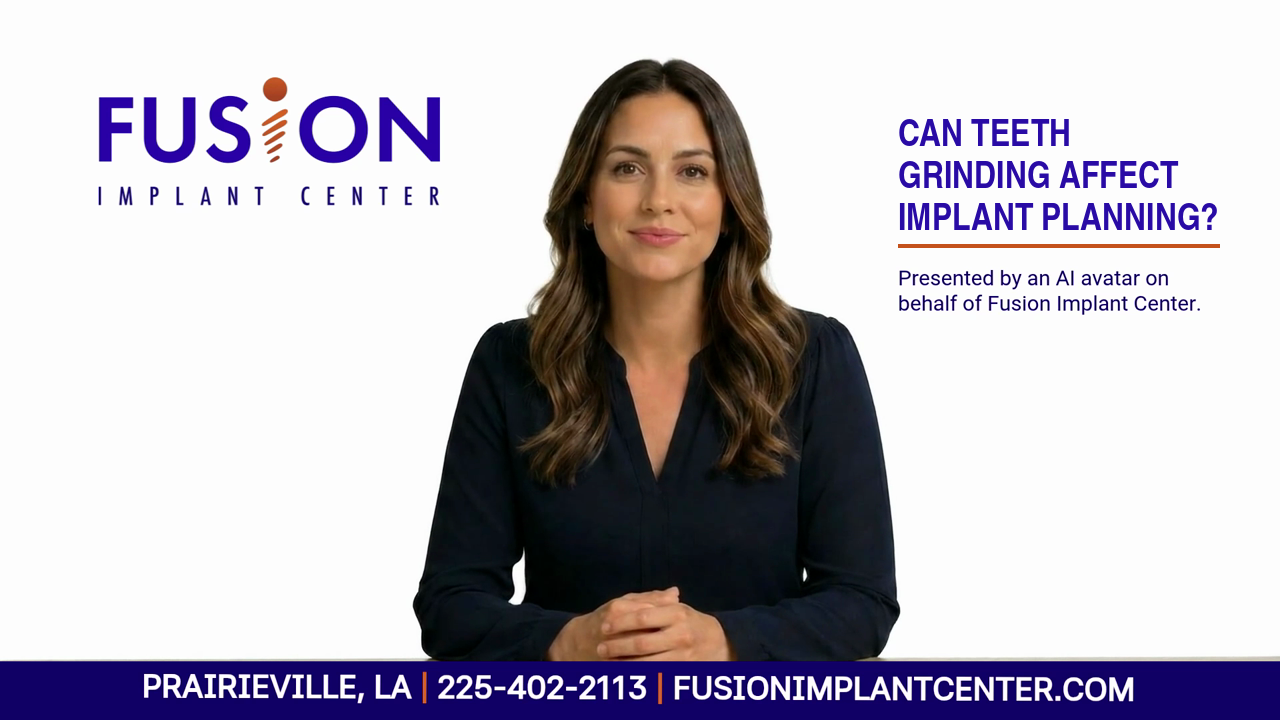
A history of clenching or grinding is useful information at an implant consultation. This patient guide from Fusion Implant Center explains what to mention, how bite forces relate to implant restorations, and what to ask.
According to the National Institute of Dental and Craniofacial Research, grinding may be linked to jaw discomfort, headaches, worn teeth and damaged dental work. Signs worth mentioning include morning jaw tension, worn or chipped teeth, or past broken crowns.
Bite forces matter for implant restorations, too. Some research suggests grinding may be linked to more mechanical complications with implant restorations, which is why follow-up and protective appliances are part of the conversation.
Tell your team about worn or chipped teeth, broken dental work, jaw tension and any nightguard you’ve used. Then ask how your bite will be evaluated and how the restoration will be monitored. Sharing that history up front gives your team a fuller picture when planning implant restorations.
Key Takeaways
- Grinding may be linked to jaw discomfort, headaches, worn teeth and damaged dental work.
- Mention morning jaw tension, worn or chipped teeth, or past broken crowns.
- Some research suggests grinding may be linked to more mechanical complications with implant restorations.
- Ask how your bite will be evaluated and how the restoration will be monitored.
For more detail, read Can Teeth Grinding Affect Dental Implant Planning?
This video is presented by an AI avatar on behalf of Fusion Implant Center. It is general information, not medical or dental advice. Always follow your own treatment team’s instructions.
Schedule a Free Consultation
Call Fusion Implant Center at (225) 402-2113 to schedule a free consultation.
Fusion Implant Center welcomes patients from the Baton Rouge area and across the country to our practice in Prairieville, Louisiana. We’re located at 14169 Hwy 73, Unit A, Prairieville, LA 70769.