About This Video
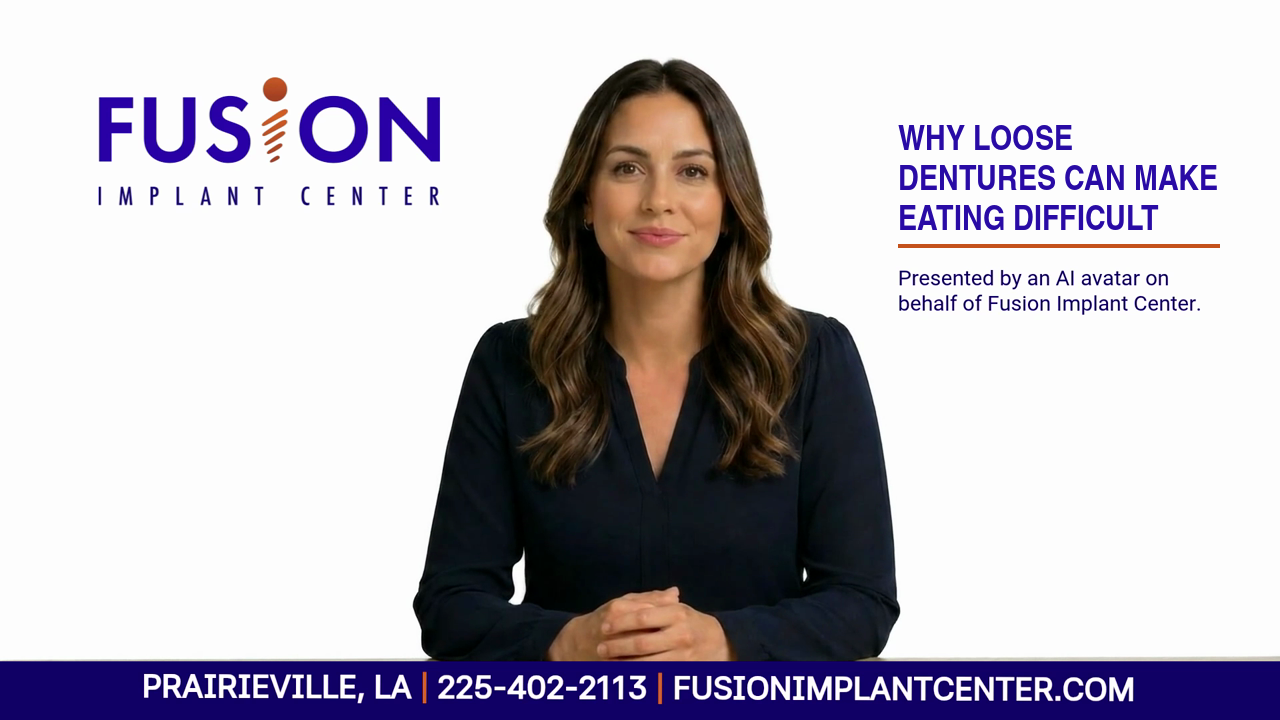
A denture that moves during meals can change how you eat. This patient guide from Fusion Implant Center covers why denture fit can change and what to discuss with your dental team.
Traditional dentures rest on the gums and supporting tissues. When a denture moves, some people take smaller bites or chew more slowly.
Whether an adjustment, a reline or another option makes sense depends on why the denture is moving, so an evaluation comes first. Specific details about meals give your team more to work with than a general sense that the denture feels loose.
When you talk with your team, describe when the denture moves, which foods are difficult to manage and whether your chewing habits have changed. Then ask whether the fit can be evaluated and what options make sense for you. The video walks through why fit can change, what you may notice at meals and which options your team may discuss. It closes with who to contact for help.
Key Takeaways
- Traditional dentures rest on the gums and supporting tissues.
- When a denture moves, some people take smaller bites or chew more slowly.
- Whether an adjustment, a reline or another option makes sense depends on why the denture is moving.
- Describe when the denture moves and which foods are difficult to manage.
For more detail, read Why Loose Dentures Affect Eating.
This video is presented by an AI avatar on behalf of Fusion Implant Center. It is general information, not medical or dental advice. Always follow your own treatment team’s instructions.
Schedule a Free Consultation
Call Fusion Implant Center at (225) 402-2113 to schedule a free consultation.
Fusion Implant Center welcomes patients from the Baton Rouge area and across the country to our practice in Prairieville, Louisiana. We’re located at 14169 Hwy 73, Unit A, Prairieville, LA 70769.