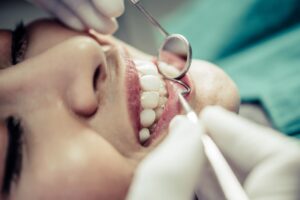

At Fusion Implant Center, patients wear a temporary restoration while implants heal, and the final full-arch teeth are zirconia. Fixed temporary teeth are the goal. Your care team will assess whether a fixed or removable temporary restoration is appropriate for your case. The temporary restoration is reviewed as treatment progresses, before the final zirconia teeth are made.
This article is general education and does not replace a clinical evaluation. Your treating team can evaluate your oral health, bone structure, medical history, and treatment goals before recommending an option.
Temporary Teeth Help Bridge the Treatment Process
A temporary restoration, also called a provisional restoration, serves a short-term role during treatment. At Fusion, it helps bridge the healing phase while the implants integrate and the restorative plan moves forward.
Temporary and final restorations serve different stages of treatment. The temporary restoration lets the team review bite, speech and appearance before the final teeth are made.
During a dental implant consultation, your treating team can explain whether a fixed temporary or a traditional temporary denture may be more appropriate based on the surgical plan and your individual clinical findings.
Helpful questions to ask about your temporary restoration include:
- How will bite, speech, and appearance be reviewed?
- How will I clean around the restoration?
Can I Receive Temporary Teeth After Implant Surgery?
While fixed temporary teeth are the goal, they are not guaranteed to be delivered on the surgery day. Poor quality of bone or other underlying issues can result in a removable denture being delivered and treatment being modified.
Temporaries are planned before surgery, and post-operative re-design appointments allow for any esthetic, phonetic, comfort or functional changes before the final teeth are planned, confirmed and made.
Your treating team will review healing and the temporary restoration as treatment progresses. Fusion also offers information about the full-mouth dental implant process so patients can better understand how the stages of care fit together.
Dental implant treatment involves surgery and ongoing maintenance. The FDA’s patient guidance on dental implants notes that treatment can involve risks such as infection, injury to surrounding structures, numbness or altered sensation related to nerve injury, sinus-related issues in the upper jaw, and implant failure. A clinical evaluation is needed to discuss which considerations may apply to you.
How Final Zirconia Teeth Differ From Temporaries
At Fusion Implant Center, final full-arch teeth are zirconia. The final design is based on patient-specific planning rather than a one-size-fits-all approach.
The final zirconia teeth replicate the approved temporaries. Fusion does not deliver final teeth on the day of surgery.
Results and treatment decisions vary by patient. Final restoration planning may consider bite, speech, appearance, cleaning access, implant position, healing, and overall oral health. Patients exploring full-mouth dental implants should expect the final plan to be tailored to their clinical needs.
Why Does the Timing of Final Teeth Vary?
Patients are typically in temporaries for about 4 to 6 months, and zirconia fabrication can take about 4 to 8 weeks. Your surgical coordinator and care team will provide a timeline specific to your case.
Clinical assessment, rather than a fixed calendar, helps determine the next phase of care. Fusion’s oral and maxillofacial surgeons and prosthodontist plan the surgical and restorative stages together.
Questions to Ask Before Choosing a Full-Arch Plan
A consultation is the time to ask clear questions about restoration options, treatment timing, risks, and maintenance. Helpful topics may include:
- Whether your temporary restoration is expected to be fixed or whether a traditional temporary denture may be used
- What the final zirconia restoration involves
- How healing and implant stability will be assessed
- What surgical and restorative risks may apply to your plan
- How to clean and maintain the restoration
- Which anesthesia option fits your plan. Fusion offers local anesthesia, IV anesthesia and general anesthesia.
Costs depend on the treatment plan. Fusion is a fee-for-service practice. It does not file dental insurance claims and does not provide paperwork for patients to file claims.
Temporary and final restorations can serve different purposes in treatment. A clinical evaluation can help clarify which restoration options may be available, when final zirconia teeth may be considered, what risks and limitations may apply, and what ongoing maintenance the plan may involve.
Discuss Your Full-Arch Options
At Fusion Implant Center, we can help you understand how full-arch dental implants may fit into your treatment plan. Our team can discuss your questions, goals, and the information needed for an individualized evaluation.
Call Fusion Implant Center at (225) 402-2113 to schedule a free consultation.